
20 min read
September 16, 2026
Iran War: Energy Market Impact Tracker
Track the Iran War's impact on energy markets. Use our weekly update to protect your transportation budget. Read the latest today.
Read more7 min read
August 7, 2026

Share:
Table of contents
Browse the table of contents to jump straight to the part you’re looking for
Marine fuel procurement is the process of sourcing, pricing, and securing bunker fuel for vessels. Carriers, fuel distributors, and port operators manage these procurement decisions every day to keep global supply chains moving. While ocean freight leaders typically don't purchase bunker fuel directly, the costs and complexities of these decisions ultimately influence the bunker adjustment factors (BAFs) they are expected to pay.
As fuel markets become more volatile and environmental regulations continue to evolve, understanding marine fuel procurement has become increasingly important for shippers. Not because they need to manage vessel fueling operations, but because they need a clearer understanding of the fuel costs moving through their ocean transportation network.
By understanding how carriers procure fuel and how costs are recovered, ocean freight leaders can improve cost visibility, evaluate fuel charges more effectively, and make more informed transportation decisions.
Marine fuel procurement refers to the sourcing, purchasing, pricing, and delivery of bunker fuel used to power ocean vessels. The process includes evaluating fuel suppliers, selecting bunkering locations, managing fuel quality requirements, monitoring market prices, and complying with environmental regulations.
Understanding the relationship between marine fuel procurement and the fuel cost per twenty-foot equivaluent unit (TEU) or forty-foot equivalent unit (FEU) is essential for organizations seeking greater transparency into their ocean transportation spend.
Marine fuel procurement involves more than simply purchasing fuel at the lowest available price. Carriers must navigate a constantly changing landscape of energy markets, port infrastructure, vessel requirements, and environmental regulations.
Unlike highway fueling networks, bunker fuel availability differs considerably from port to port. VLSFO and LS MGO may be readily available in one region while remaining limited or more expensive in another.
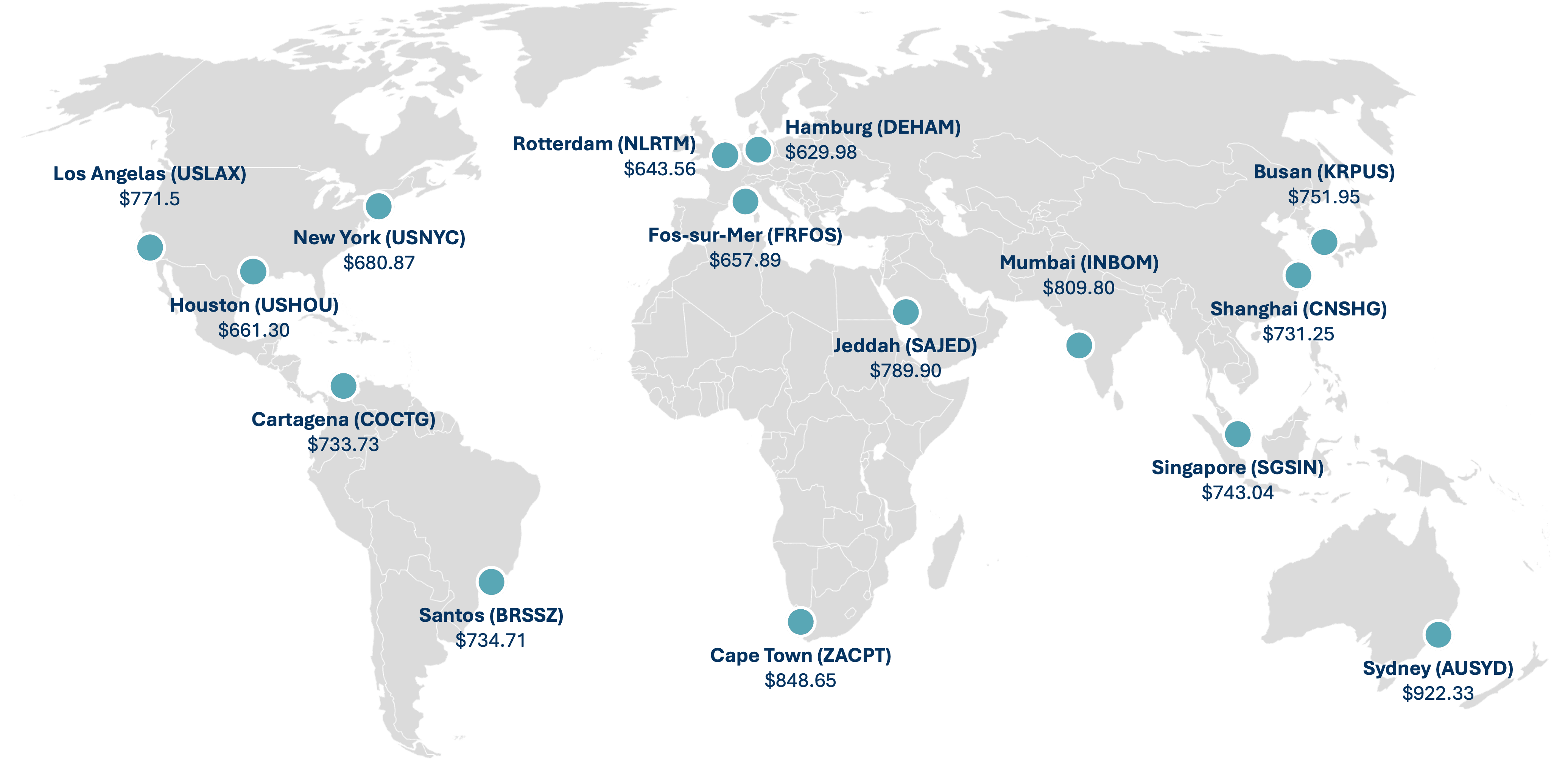
As a result, carriers carefully evaluate where fuel should be purchased along specific trade lanes. In some cases, purchasing fuel in a lower-cost market may offset additional operational considerations and create a more favorable cost position. These sourcing decisions ultimately influence the fuel costs that flow downstream to shippers.
Crude oil markets heavily influence bunker fuel prices, refining economics, geopolitical activity, and regional supply-demand conditions. These market fluctuations create significant pricing variability between locations and the day of purchase. Adding complexity, fuel is often purchased, consumed, and recovered through transportation charges on different timelines. This monthly to quarterly lag creates challenges for both carriers managing marine fuel procurement risk and shippers attempting to understand the actual fuel costs associated with their transportation network.
Environmental regulations are changing the economics of marine fuel procurement. Requirements from the International Maritime Organization (IMO), FuelEU Maritime, and the European Union Emissions Trading System (EU ETS) continue to influence fuel selection, operating costs, and procurement decisions. As regulations evolve, carriers must account for compliance-related costs when developing procurement strategies. Those costs frequently become part of the fuel-related expenses eventually recovered through transportation contracts and BAF programs.
Several factors shape how carriers approach marine fuel procurement.
Global energy markets remain one of the largest drivers of bunker fuel prices. Changes in refinery output, crude oil pricing, geopolitical disruptions, and regional demand patterns can all influence marine fuel procurement costs.
Marine fuel procurement decisions are heavily influenced by vessel design and engine capabilities. Different vessels require different fuel strategies based on operational requirements and compliance considerations.
Procurement planning often varies across trade lanes. Fuel availability, transit times, and regional regulations can significantly impact sourcing decisions and cost outcomes.
Carriers continually evaluate supplier reliability, fuel quality, service levels, and pricing opportunities across bunkering ports. Strategic supplier management can help reduce operational risk while supporting cost efficiency.
Ocean freight leaders face a different challenge than carriers. They generally do not control where fuel is purchased, which suppliers are selected, or how vessels are bunkered. However, they are responsible for understanding and managing the transportation costs associated with those decisions. This becomes difficult when fuel charges are recovered through BAF calculations that may not accurately reflect the reality of the movement.
Many traditional BAF programs were designed to simplify fuel reimbursement. While administratively convenient, they may provide limited visibility into the variables that drive fuel costs, including:
Without transparency into these drivers, it can be challenging for ocean freight teams to understand their true fuel cost exposure.
Marine fuel procurement and fuel reimbursement rarely occur simultaneously. A carrier may purchase fuel months before consumption occurs, causing uncertainty around actual bunker fuel costs. For ocean freight leaders focused on fuel budgets, understanding these relationships becomes increasingly important.
While shippers do not directly manage marine fuel procurement, they can take steps to better understand and validate fuel costs. A market-based approach, like Marine Fuel Recovery, evaluates factors such as port market prices, consumption by fuel type, speed & transit days, vessel engine specs & utilization. This provides a more precise view of bunker fuel costs than distorted BAF programs. By grounding fuel reimbursement in actual market conditions, organizations can improve budgeting accuracy and strengthen confidence in transportation-related fuel costs.
Marine fuel procurement influences nearly every aspect of ocean transportation economics. The decisions made by carriers and marine fuel suppliers ultimately affect shippers’ transportation budgets through BAF charges. As fuel markets and regulations continue to evolve, greater transparency becomes increasingly valuable. Marine Fuel Recovery helps organizations understand the true drivers of bunker fuel costs, replace distorted BAF methodologies with market-based calculations, and gain greater confidence in fuel-related transportation spending.
Learn how Marine Fuel Recovery helps organizations bring transparency and accuracy to bunker fuel costs.
For carriers, bunker suppliers, and vessel operators, the best marine fuel procurement strategies focus on balancing cost, fuel availability, regulatory compliance, and operational risk. Effective procurement programs evaluate fuel pricing, supplier reliability, port availability, and the impact of regulations such as the European Union Emissions Trading System (EU ETS) and FuelEU Maritime.
VLSFO and LS MGO fuel prices are influenced by a combination of global crude oil prices, regional supply and demand dynamics, and the regulatory environment. Crude oil prices serve as the foundation for marine fuel costs and can fluctuate based on geopolitical events, refinery activity, production levels, and broader market demand. Regional factors such as refining capacity, transportation logistics, and fuel availability at specific ports can also create significant price differences across trade lanes.
In addition, environmental regulations continue to shape marine fuel markets. Requirements such as IMO 2020 sulfur standards, FuelEU Maritime, and the EU ETS can influence both fuel selection and procurement costs by increasing demand for compliant fuel products and incorporating emissions-related expenses into carrier operating costs.
For ocean freight leaders, these factors ultimately affect the fuel-related charges embedded within ocean transportation costs. Understanding the market forces influencing marine fuel procurement can provide valuable context when evaluating bunker adjustment factors, fuel surcharges, and overall ocean freight spend.
Marine Fuel Recovery
Gain visibility into your true fuel costs and uncover opportunities to reduce your bunker fuel spend.
20 min read
September 16, 2026
Track the Iran War's impact on energy markets. Use our weekly update to protect your transportation budget. Read the latest today.
Read more
3 min read
August 12, 2026
Visit Breakthrough at booth 302 during CSCMP EDGE and hear Andersen Corporation share how data-driven insights help manage fuel volatility and rising costs.
Read more
11 min read
July 30, 2026
Learn how the updated SBTi corporate net-zero standard changes how shippers measure and reduce transportation emissions.
Read more