5 min read
How Food & Beverage Shippers Can Reduce Transportation Costs
January 1, 2025
Share:
Table of contents
Browse the table of contents to jump straight to the part you’re looking for
Introduction
Consumers aren’t concerned with how much it costs to bring a product to grocery store shelves — they just care about the total at the register.
Since the beginning of 2023, nearly 70% of consumers said they cut back on non-essential spending at the grocery store. For food and beverage companies already operating on slim margins in shelf-edge prices, the impact on revenue is significant.
While there’s little food and beverage brands can do to influence shoppers’ cart sizes or inflation levels, there’s still an opportunity to recoup revenue losses by fine tuning one key business area — the supply chain. And it starts with a granular view of your entire transportation network.
By rethinking your supply chain strategy to optimize for cost at the lane level, your food and beverage company can grow its margins and ease inflationary pressures.
A Three Point Savings Plan for Food & Beverage Shippers
Given how tight food and beverage companies’ margins are in the first place, it’s critical to identify any and every opportunity to reduce costs throughout the supply chain.
Understanding and proactively managing the costs associated with supply chain distribution is a fundamental part of any strategy to combat inflationary pressures. This methodical approach positions you to navigate price swings more effectively and maintain sustainable growth — but it requires visibility into your entire supply chain.
Access to comprehensive transportation data enables you to negotiate favorable freight contracts, identify inefficiencies, explore alternative transportation methods and routes, and pilot innovative logistics solutions.
Without this foundation of data, your ability to optimize your transportation operations — and adapt when the market shifts — is limited.
Shippers who focus on the following will actualize savings as shelf-edge prices rise:
- Form genuine partnerships with carriers
- Find a trusted, transparent benchmarking source
- Get down to lane-level assessments
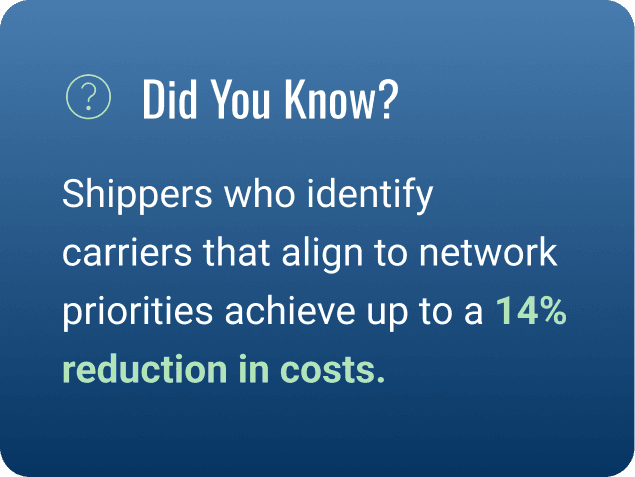
1. Form genuine partnerships with carriersTransportation data partners can provide the tools you need to nurture your core carrier base while simultaneously exploring new partnerships to fill gaps and support growth. They can also help you identify regional fleets that can provide additional capacity in key geographies when inventory demands ebb and flow. Finding alignment with partners includes asking questions about:
|  | |
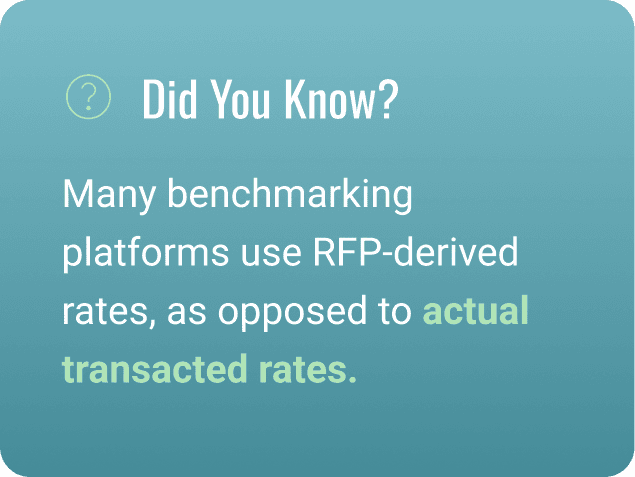 | 2. Find a trusted, transparent benchmarking sourceThe data sources you use to benchmark costs are the most important differentiator in your ability to forecast and control costs. The quality and relevance of the data sources you rely on for transportation benchmarking impact your ability to make informed decisions, establish realistic cost targets, and maintain control over expenses. Food and beverage benchmarking best practices include:
| |
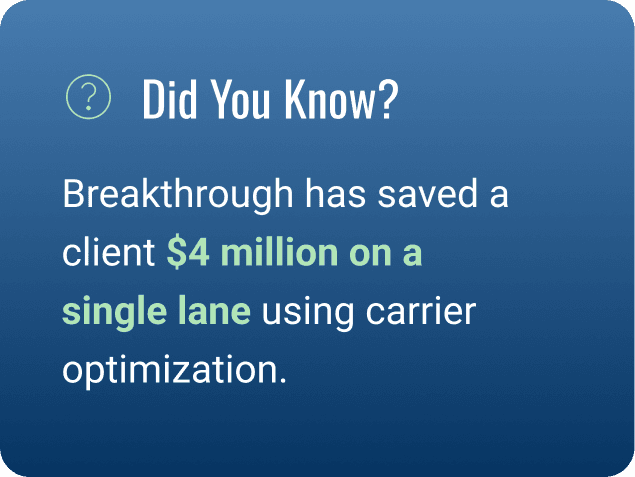
3. Get down to lane-level assessmentsYou will begin to achieve real savings and better cost control when you are able to make lane-level shipping estimates as accurate and granular as possible. Does your current process take into consideration real-time fuel prices, fuel efficiency, linehaul rates, refrigeration, accessorial charges, and other important factors? Achieving lane-level insights is possible with a partner who:
|  | |
Evaluate your Transportation Network with Precision to Maximize Savings
With Breakthrough’s Network Intelligence solution, food and beverage shippers get access to best-fit asset-based carrier information, carrier compliance tracking, greater network visibility, and lane-level optimization insights.
Looking for savings in the thin margins between supplier and store shelves?
Explore how Breakthrough’s transportation network management solutions can help you unlock efficiency, reduce costs, and stay ahead of industry trends.

Download the tip sheet
Take the full How Food & Beverage Shippers Can Fight Inflation by Cutting Freight Costs tip sheet with you. Download your copy to save these insights for future reference or to share them with your team.