
20 min read
October 7, 2026
Iran War: Energy Market Impact Tracker
Track the Iran War's impact on energy markets. Use our weekly update to protect your transportation budget. Read the latest today.
Read more5 min read
July 13, 2026

Share:
Table of contents
Browse the table of contents to jump straight to the part you’re looking for
Given the marked uncertainty in fuel markets caused by the war in the Middle East, it can be difficult to also keep track of diesel excise tax changes. However, it is important to monitor these semi-annual adjustments as they can have a notable impact on budgets and complicate transportation spend management.
Without timely and accurate data, even minor tax shifts across different states can lead to inaccurate fuel reimbursements and erode your profit margins. Integrating up-to-date information on state diesel fuel taxes directly into your carrier fuel reimbursement calculations is crucial. By leveraging precise diesel fuel tax by state data, organizations can have more transparent conversations with carriers and ensure your fuel cost strategies remain both effective and fair.
As of July 2026, several states have implemented adjustments to their diesel fuel tax rates. These changes, while seemingly small on a per-gallon basis, have a direct impact on transportation costs and the operational budgets of shippers and carriers. Below is a list of states with notable changes.
The first half of 2026 saw a significant shock in global energy markets, creating strong upward price pressure for fuels, especially diesel. Despite these price impacts, only Georgia and Kentucky introduced diesel excise tax relief. Kentucky offered price relief through a temporary 10¢ reduction diesel tax reduction, which has since expired, as of June 30. Meanwhile, Georgia offered the most significant tax relief, fully suspending fuel taxes until June 3, 2026.
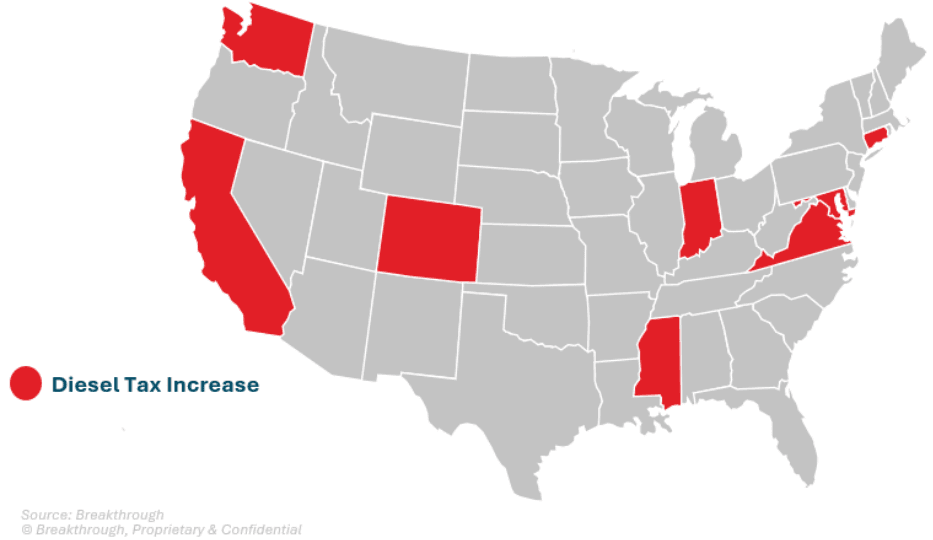
As markets have responded to the possibility for continued diplomacy between the U.S. and Iran, diesel price pressures have eased somewhat. In small part, it may be this price moderation, but most importantly, state budget concerns, that have led eight states to increase their fuel taxes, albeit modestly.
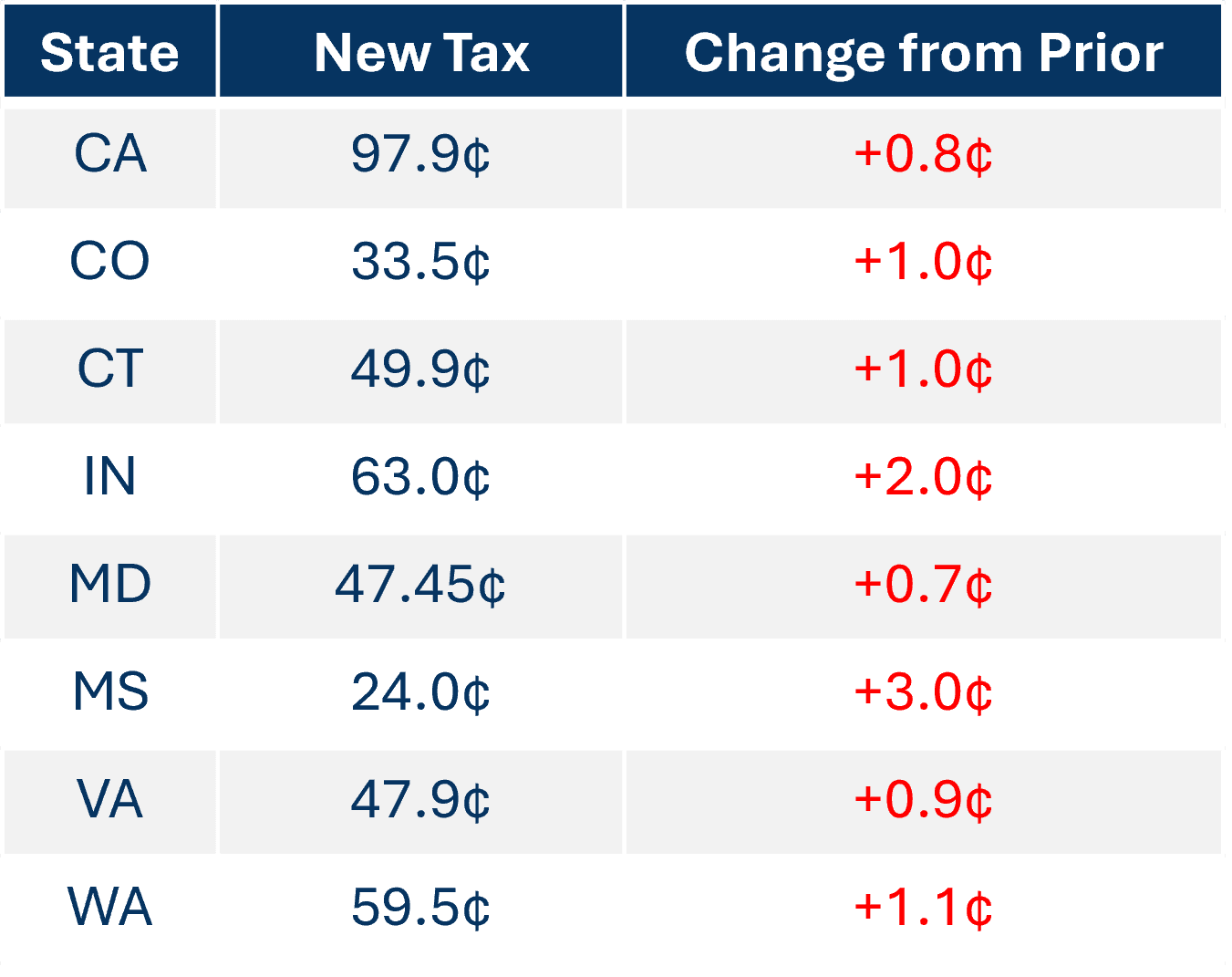
Eight states introduced tax hikes, reflecting efforts to maintain consistent revenue streams for infrastructure needs. Some notable tax increases include:
Many states use automatic adjustment mechanisms to ensure their diesel fuel tax by state keeps pace with economic conditions. This practice helps sustain long-term funding for transportation projects but adds a layer of complexity for shippers and carriers. Common methods include:
These systems are designed to maintain the purchasing power of infrastructure funds. However, they also introduce variability that can challenge traditional fuel surcharge programs and make accurate cost forecasting difficult.
For shippers and carriers, staying informed about diesel fuel tax adjustments is crucial for effective budget management and operational planning. These changes directly influence freight costs, making it essential to proactively adapt strategies for transportation fuel cost reduction.
Ignoring these details can lead to over or under-reimbursing carriers for fuel, which distorts the true cost of transportation fuel spend. A market-based fuel reimbursement program provides the necessary precision to navigate this complex landscape. By calculating reimbursements based on the specific time, tax, price, and geography of each freight movement, you can ensure fairness and accuracy.
If you want to eliminate manual tracking and ensure your fuel cost strategies remain both accurate and effective, it’s time to consider Fuel Recovery.
In the third quarter of 2026, California, Colorado, Connecticut, Indiana, Maryland, Mississippi, Virginia, and Washington State all increased their diesel fuel tax rates. Mississippi and Indiana saw the most significant hikes, with increases of 3.0¢ and 2.0¢ per gallon, respectively.
States adjust diesel fuel taxes primarily to fund transportation infrastructure projects, including the construction and maintenance of roads, highways, and bridges. Many states use automatic adjustment formulas tied to inflation or fuel prices to ensure revenue keeps pace with rising costs and economic changes.
The most effective way to manage the impact is to use a market-based fuel reimbursement program. Unlike traditional DOE-based surcharges, this approach accounts for the exact taxes, price, and location of each fuel purchase. This ensures reimbursements are accurate and reflect the true cost of fuel, protecting your budget from unforeseen variances.
Fuel Recovery
Get the diesel fuel tax by state data you need to accurately reimburse for fuel.

20 min read
October 7, 2026
Track the Iran War's impact on energy markets. Use our weekly update to protect your transportation budget. Read the latest today.
Read more
12 min read
October 6, 2026
The October 5 executive order defers federal tax on dyed diesel used on-highway through December 31, 2026. Learn what it changes, what it does not, and how it affects fleet fuel programs.
Read more
3 min read
August 12, 2026
Visit Breakthrough at booth 302 during CSCMP EDGE and hear Andersen Corporation share how data-driven insights help manage fuel volatility and rising costs.
Read more