8 min read
April 3, 2026
Iran War: Energy Market Impact Tracker
Track the Iran War's impact on energy markets. Use our daily update and real-time insights to protect your transportation budget. Read the latest today.
Read more6 min read
February 19, 2026

Share:
Table of contents
Browse the table of contents to jump straight to the part you’re looking for
The European Union is preparing to roll out a new carbon pricing policy, the Emissions Trading System II (ETS II), which will directly affect road transport. For shippers, this new regulation introduces uncertainty and the potential for cost increases, making it difficult to forecast budgets and manage fuel expenses. By understanding the structure of the ETS II, its timeline, and its projected financial impact, organizations can develop strategies to maintain cost control and operational efficiency.
The ETS II is a key pillar of the EU’s decarbonization strategy. It operates as a "cap and trade" system, where a cap is set on the total amount of certain greenhouse gases that can be emitted. Allowances for these emissions are then auctioned or allocated, creating a market price for carbon.
Unlike the original ETS, which focuses on stationary installations like power plants and industrial facilities, the ETS II will apply specifically to fuels used in road transport and buildings. This expansion is designed to accelerate emissions reductions in sectors that have been more difficult to decarbonize.
The ETS II was initially planned for a 2027 launch. However, due to internal political discussions and concerns over its economic impact, the start date has been pushed to 2028. There remains a possibility of further delays as member states negotiate the final details.
The EU is targeting a carbon allowance price of approximately €45 per metric ton. For shippers, the most direct impact will be on fuel costs. This price would translate to an increase of about 12 euro cents per liter of diesel. This new cost component will directly affect transportation budgets and must be factored into future financial planning. For a comprehensive look at the factors that influence fuel costs, it is important to understand the price of diesel in Europe.
The implementation of the EU ETS II will not be uniform across the entire bloc. A crucial detail for shippers is that countries with their own national carbon pricing policies for road transport will be exempt from the EU ETS II for a few years.
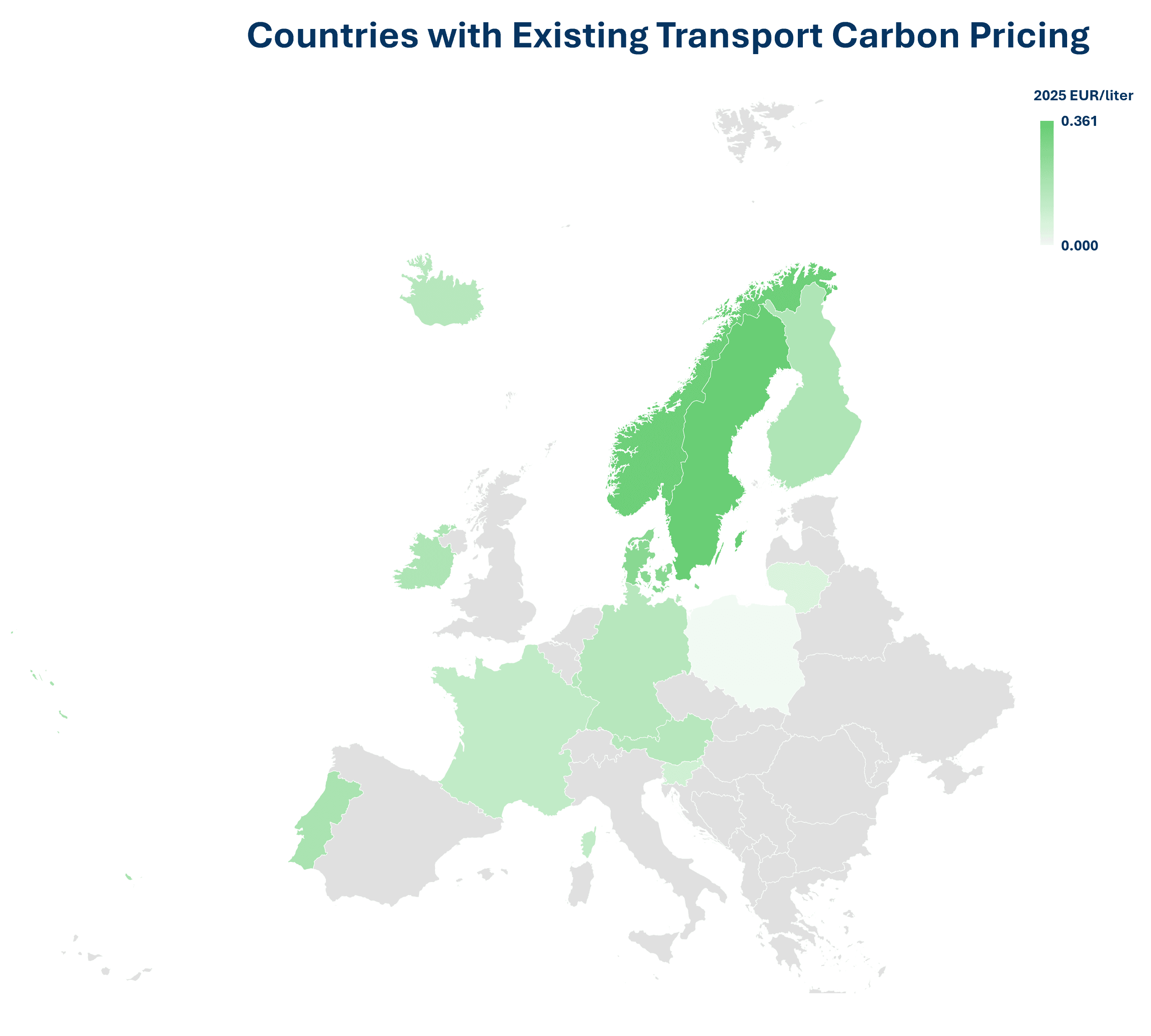
To qualify for this exemption, a country’s national carbon price for road transport must be equal to or greater than the EU ETS II benchmark of €45 per metric ton. Several countries already meet this threshold, including:
These nations, particularly the Nordic states with their stringent emissions policies, will be less affected by the initial rollout of the ETS II. Shippers operating primarily in these regions will experience a more gradual transition as the national and EU-level systems align over time.
The situation is more complex for the majority of EU member states that do not have a national carbon pricing system for road transport. These countries will feel the full and immediate financial impact of the ETS II.
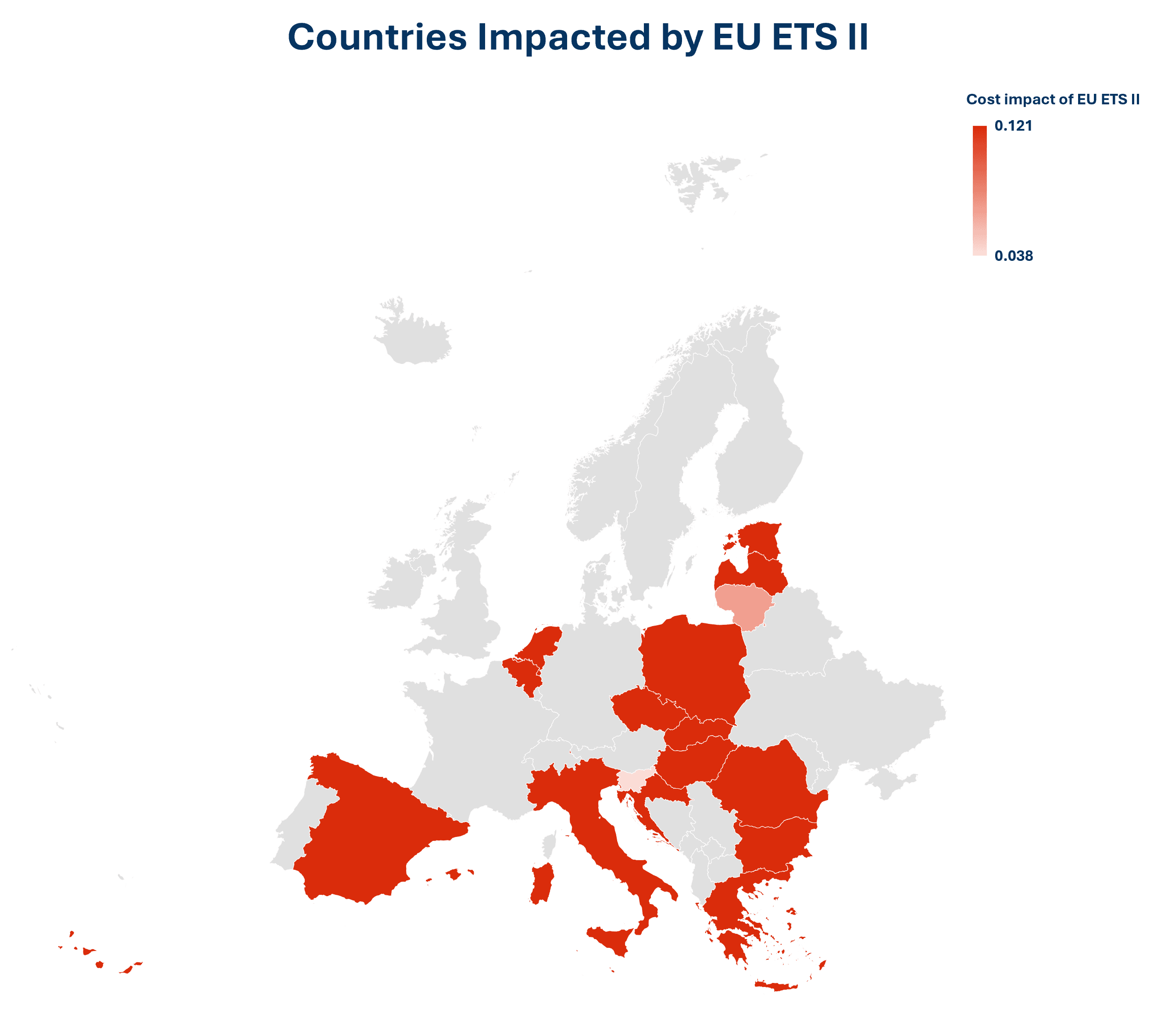
This has caused significant concern among national leaders in countries like Poland and the Czech Republic. They have been particularly vocal about the potential negative consequences for their national industries and consumers, especially when combined with other economic pressures. These ongoing political debates are a primary reason for the program’s delay and a key factor to monitor as the 2028 implementation date approaches.
The European Union Emissions Trading System II will add another layer of complexity to managing transport energy costs. Shippers must move beyond "all-in" transport costs and adopt a more data-driven, granular approach. By separating fuel from transport costs, companies can gain visibility into the true cost of fuel and ensure they are reimbursing carriers accurately and fairly.
Solutions like Fuel Recovery provide the necessary tools to account for the specific time, price, geography, equipment, and consumption of each movement. This ensures that new cost components, like those from the ETS II, are managed with precision.
How will the European Union Emissions Trading System II affect diesel prices?
The EU ETS II is expected to add approximately 12 euro cents per liter to the cost of diesel. This is based on the EU's target carbon allowance price of €45 per metric ton. This additional cost will be applied to fuel used for road transport in member states subject to the policy.
Which countries will be most affected by the EU ETS II?
Countries that do not currently have a national carbon pricing system for road transport will be most affected. These nations, such as Poland and the Czech Republic, will experience the full cost impact of the ETS II immediately upon its implementation. Countries with existing carbon taxes at or above the EU benchmark, like Germany and Sweden, will see less immediate change.
Is the 2028 start date for the EU ETS II final?
While the official start date has been moved to 2028, it is not guaranteed to be final. Ongoing political discussions among EU member states, driven by concerns over the economic impact on industries and consumers, could lead to further delays or adjustments to the program's timeline and structure.
What is the difference between the existing EU ETS and ETS II?
The original EU ETS primarily targets greenhouse gas emissions from stationary installations, such as power plants and large industrial facilities. The new ETS II is a separate but complementary system that expands carbon pricing to cover emissions from fuels used in road transport and buildings, two sectors not included in the original system.
Fuel Recovery
Uncover accurate fuel costs from all-in transport rates with a transparent solution.

8 min read
April 3, 2026
Track the Iran War's impact on energy markets. Use our daily update and real-time insights to protect your transportation budget. Read the latest today.
Read more
6 min read
March 31, 2026
Traditional fuel surcharge programs fall short. Learn how a market-based fuel reimbursement, calculated by the specific time, tax, price, and geography of each movement, can enhance transparency.
Read more
9 min read
March 30, 2026
Discover top freight RFP strategies to build a competitive advantage, reduce transportation costs, and foster strong carrier partnerships for a resilient network.
Read more