22 min read
November 18, 2026
Iran War: Energy Market Impact Tracker
Track the Iran War's impact on energy markets. Use our weekly update to protect your transportation budget. Read the latest today.
Read more7 min read
November 23, 2026

Share:
Table of contents
Browse the table of contents to jump straight to the part you’re looking for
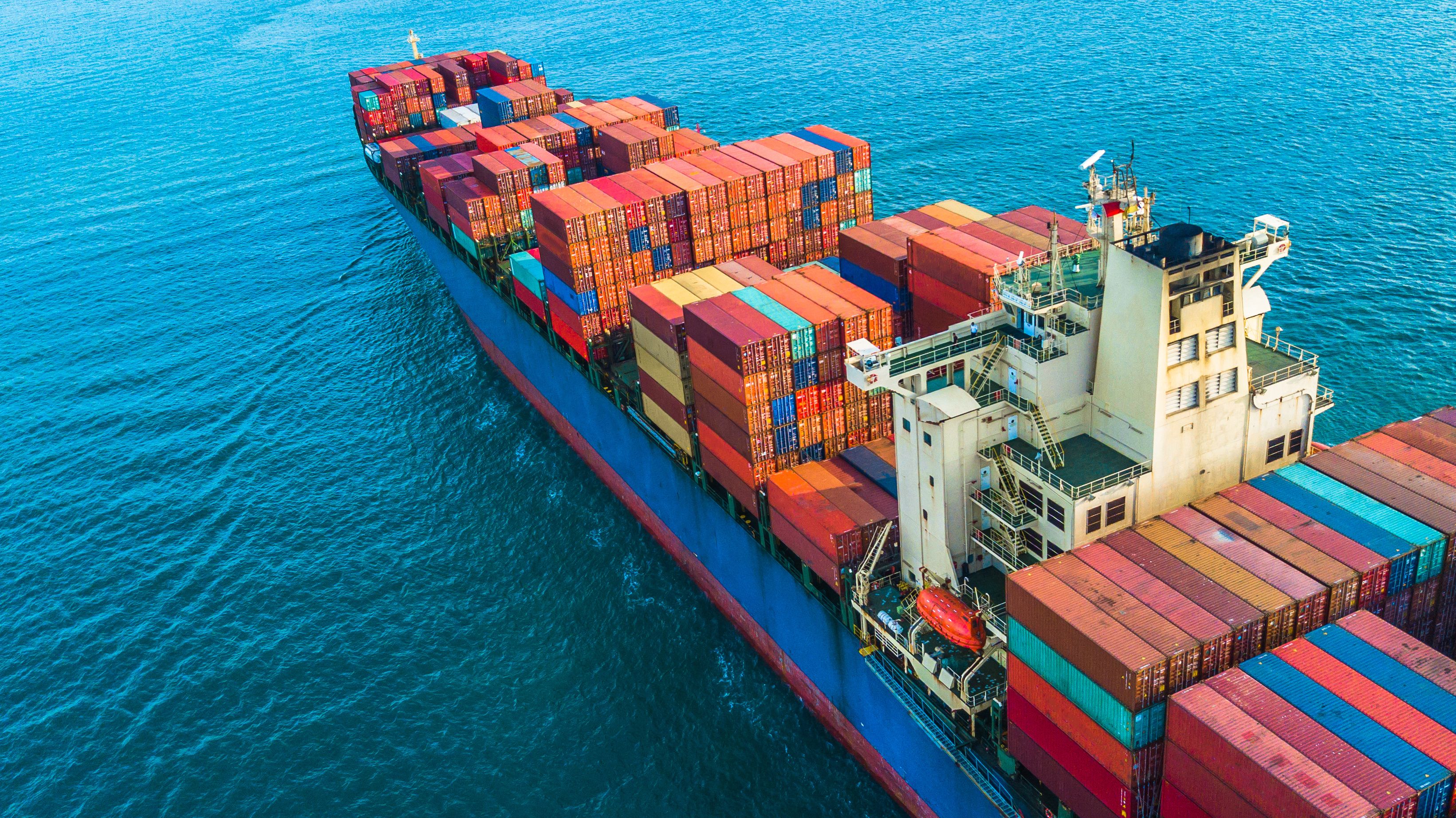
Ocean fuel costs are no longer a line item shippers can wave through. Brent topped $116 in late October after a record month of tanker attacks in the Persian Gulf, and the IEA warns distillate supply could stay tight into 2027.
Yet most shippers still manage marine fuel in one of two ways: accept each carrier's bunker adjustment factor (BAF) or tie it to a static index that resets on a lag. Both leave money and control on the table.
A shipper-led marine fuel program models what fuel should cost on each lane, then benchmarks every carrier bunker adjustment factor (BAF) against that model. It also separates EU ETS and Emission Control Area (ECA) charges so each can be audited.
The result: shippers negotiate from data instead of accepting published surcharges.
Research from the Federal Reserve Bank of St. Louis, published in July 2026, states the case plainly:
"Oil-price shocks are also shipping-cost shocks, but they are not uniform shipping-cost shocks."
The authors build fuel cost per container from three inputs: fuel burned per TEU per day, voyage days, and the bunker price.
When VLSFO climbed from $518 to $901 per metric ton between February and spring 2026, up 74 percent, fuel cost on a 21-day China-to-U.S. West Coast voyage rose very differently by ship:
If BAFs tracked fuel cost, carriers on the same lane would publish similar numbers. They don't. Q4 2026 BAFs filed with the FMC for Asia-to-U.S. lanes show spreads close to 2:1 per 40-foot container:
Asia to U.S. lane (Q4 2026) | Dry BAF per FEU | Reefer BAF per FEU |
|---|---|---|
Pacific Coast | $488 to $929 | $752 to $1,394 |
Atlantic and Gulf Coast | $840 to $1,542 | $1,238 to $2,597 |
Source: FMC, dpiUSA.com/signals
Some of that gap reflects real differences in fleet age, vessel size, and routing. Some reflect formula choices, timing lags, and margin. Carrier decisions on marine fuel procurement also flow into those charges. Without your own view of what fuel should cost on each lane, you cannot tell which is which.
Fuel is only the first layer. Since 2026, the EU Emissions Trading System covers 100 percent of in-scope shipping emissions, and methane and nitrous oxide now count alongside CO₂. Owners can recover those costs from whoever buys the fuel or sets route and speed, so they surface as surcharges.
On a North Europe to Southeast Asia service, Breakthrough's model puts the Q3 2026 BAF at $264 per TEU and the EU ETS charge at another $47.70 per TEU, with allowances near $83 per metric ton of CO₂.
Emission Control Areas add more. The Mediterranean ECA, in force since May 2025, adds about $20 per TEU per lane across Breakthrough's network. The Northeast Atlantic ECA is expected in September 2027.
Each layer has its own price driver and its own exposure by route. Folding them into one opaque surcharge makes it impossible for them to audit.
The St. Louis Fed’s analysis aligns with data-driven practices Breakthrough has applied with shippers for years. A shipper-owned program brings that approach to your own network.
The 2027 outlook argues for structure over guesswork. Even if geopolitical tensions ease, rebalancing global energy markets will take time, and bunker prices are likely to stay above pre-war levels into 2028. See how shippers are building resilient maritime transportation in volatile markets.
Shippers that own their fuel math stop debating whether a bunker adjustment factor feels fair and start negotiating data. In a market this volatile, that difference compounds every quarter.
What is a bunker adjustment factor (BAF)?
A BAF is a fuel surcharge applied by ocean carriers to account for changes in the cost of marine fuel (bunker fuel) used to operate container vessels. Amounts vary by trade lane, carrier, vessel type, and fuel type.
Why do BAFs differ so much between carriers on the same lane?
Some of the gaps reflect real differences in fleet age, vessel size, and routing. Some reflect formula choices, timing lags, and margin. Q4 2026 BAFs filed with the FMC for Asia-to-U.S. lanes show spreads close to 2:1 per 40-foot container.
How do EU ETS and ECA rules affect ocean freight costs?
Since 2026, the EU ETS covers 100 percent of in-scope shipping emissions, and owners can pass those costs through as surcharges. ECAs add their own charges, such as about $20 per TEU per lane for the Mediterranean ECA, and these costs vary with broader market volatility.
How can shippers take control of marine fuel costs?
Shippers can model fuel costs by lane, separate regulatory charges, agree on an update cadence with each carrier, and benchmark every carrier's BAF against their own model.
Marine Fuel Recovery
Gain visibility into lane-level marine fuel costs and benchmark carrier charges with greater confidence.
22 min read
November 18, 2026
Track the Iran War's impact on energy markets. Use our weekly update to protect your transportation budget. Read the latest today.
Read more
13 min read
November 16, 2026
Learn how diesel fuel surcharge programs affect transportation budgets, and why market-based fuel reimbursement helps shippers control fuel costs.
Read more
5 min read
November 10, 2026
Learn how a transportation data analytics platform uses reliable freight data to improve RFP benchmarks, carrier sourcing, and post-award performance.
Read more