
3 min read
March 16, 2026
Iran War: Energy Market Impact Tracker
Track the Iran War's impact on energy markets. Use our daily update and real-time insights to protect your transportation budget. Read the latest today.
Read more4 min read
July 29, 2025

Share:
Table of contents
Browse the table of contents to jump straight to the part you’re looking for
Fuel costs, influenced by factors like geopolitical tensions, shifts in supply and demand, and natural disasters, are a major variable in the transportation industry. These market factors make it challenging for companies to operate within their budgets. This is where fuel surcharges come in.
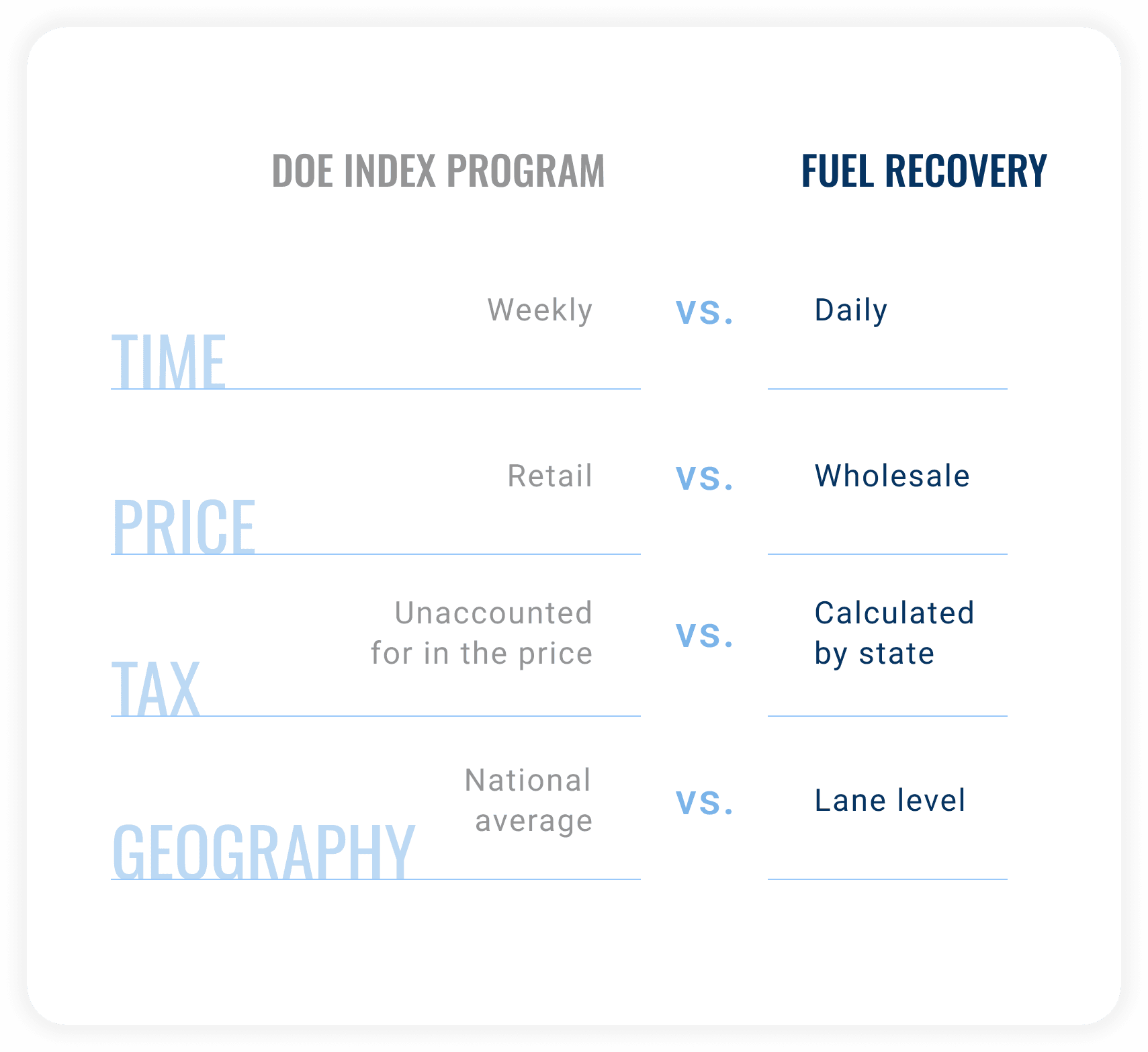
Fuel surcharges reimburse carriers for the fuel costs incurred by shipment. As fuel prices fluctuate, the shipper defined schedule helps reconcile the discrepancy. While fuel surcharges were introduced as a solution to provide a standardized way for carriers to recover the additional fuel costs incurred during shipments, they don’t ensure carriers get paid accurately for the fuel they procure. This gap highlights the need for more precise tools to address fluctuating fuel expenses. By implementing a real-time, lane-level solution, shippers can facilitate smoother reimbursements with their carriers—even in the most volatile markets.
A fuel surcharge is an extra fee shippers add to the linehaul rate to offset changing fuel prices. It helps carriers adjust how much they get paid based on the market. It's traditionally calculated on a fuel schedule and adjusts as diesel prices change.
Traditionally, fuel surcharges are tied to a standard index, such as the U.S. Department of Energy’s weekly diesel price index. This index is a weekly average for fuel prices across the country. When fuel costs exceed a certain threshold, surcharges are triggered and applied to shipping invoices. For example, a base fuel price may be set at $1.20 per gallon. If the average fuel price for the week is $3.042 per gallon, the fuel surcharge will be $0.30.
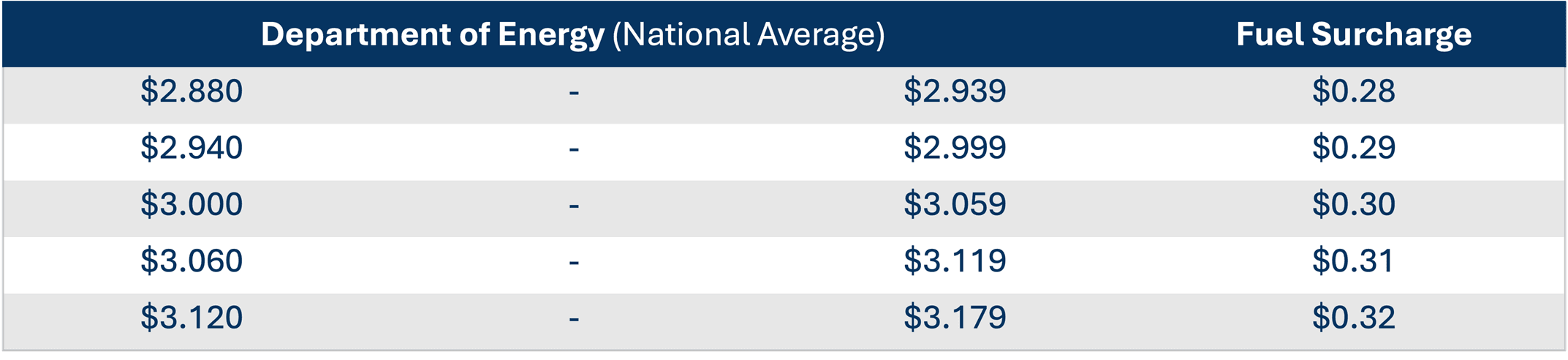
Fuel surcharges can be calculated in various ways, depending on shipper policies. Some shippers use a rate per mile, while others calculate fuel surcharges as a percentage of the linehaul rate. Understanding these calculations is critical for forecasting and budgeting.
Although fuel surcharges are essential for covering fuel costs, they aren’t without their challenges. Here are a few limitations to consider:
To gain control over fluctuating fuel expenses, many companies turn to fuel management software and market-based fuel reimbursement calculations, like Breakthrough’s Fuel Recovery program. These tools automate and streamline calculations, providing real-time insights into fuel consumption and costs.
Building on this, a zero-base rate strategy removes the base rate so that fuel is separate from the linehaul rate. This strategy enables shippers to continue using their existing fuel program, while gaining clearer insight into its components, leading to long-term advantages like reduced costs and enhanced operational efficiency.
The ultimate way to gain control of your fuel spend is by locking in fixed fuel prices for your network. Risk management solutions like T-Fuel help you manage your budget more effectively, gain clarity on your cost profile, and better predict your energy spend. Together, fuel management software and proactive strategies deliver key benefits, including:
Managing fuel surcharges doesn’t have to be overwhelming. By utilizing data-driven solutions like Fuel Recovery, you can identify cost-saving strategies, increase transparency, and foster stronger carrier relationships. Enter your data in our Fuel Savings Calculator to explore how much you could save!
3 min read
March 16, 2026
Track the Iran War's impact on energy markets. Use our daily update and real-time insights to protect your transportation budget. Read the latest today.
Read more
6 min read
March 13, 2026
Stop overpaying. Learn how a new approach to energy management that separates fuel from freight gives you cost control, transparency, and fair market-based pricing.
Read more
6 min read
March 12, 2026
The Iran War is causing energy market volatility. Learn how to protect your transport budget with fair and accurate fuel reimbursements for your carriers.
Read more